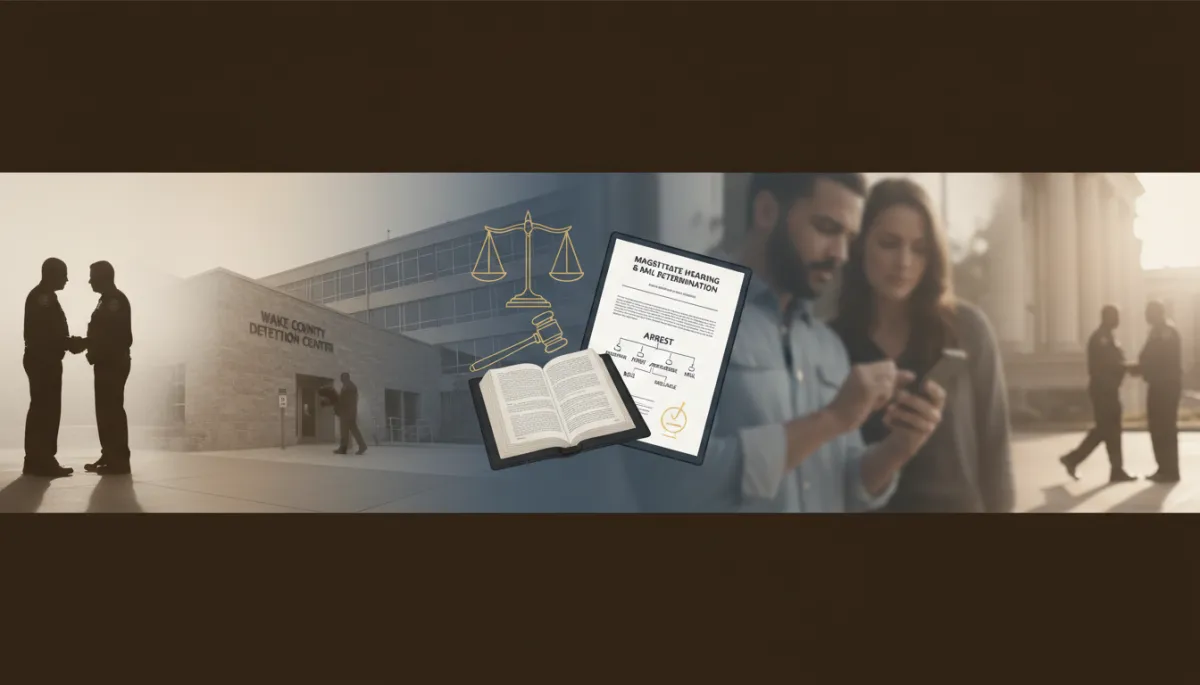
What Happens After an Arrest in North Carolina | A Guide for Families | Amistad Bail Bonds
What Happens After an Arrest in North Carolina?
When a loved one is arrested, it can feel like the ground just dropped out from under you. You want clear answers: what happens after an arrest, where they’re taken, how long things will take, and what you can do right now to help. This guide walks you through each step in plain language—from the moment of arrest, to jail booking, the first appearance before a magistrate, bail being set, and release timing—so you know what to expect and how to support your family member through the process.

The Moment Someone Is Arrested
In North Carolina, an arrest happens when law enforcement decides your loved one is not free to leave and takes them into custody. This can be based on a warrant or because the officer believes there is enough reason to think a crime was committed. The person may be arrested at the scene of an incident, after an investigation, or after a warrant is issued by a magistrate or judge. They are usually handcuffed and transported in a patrol car to a local jail or county detention facility for processing.
During or shortly after the arrest, officers may read the person their Miranda rights if they plan to ask questions. This includes the right to remain silent and the right to ask for an attorney. It is often best for your loved one to stay calm, be polite, and avoid arguing or trying to explain everything on the spot. There will be time later to share their side with a lawyer.
In the first few hours, it is very common for communication to be limited. Officers are focused on transportation and intake. Not getting a call right away does not mean something is wrong—it usually just means the process is still underway.
As a family member, your first job is to gather basic information if you can: your loved one’s full name, date of birth, the county where the arrest happened, and the name of the arresting agency (for example, Raleigh Police Department or Wake County Sheriff’s Office). This information will help you later when you call the jail or try to check inmate status through local tools.
What Happens During Jail Booking?
After arrest, your loved one is taken to a law enforcement facility or county detention center for booking. In Wake County, for example, individuals are commonly transported to the Wake County Detention Center in Raleigh for intake and housing. Other counties have their own detention facilities, but the basic steps of booking are similar across the state, as outlined by the North Carolina Judicial Branch (nccourts.gov).
Booking is simply the jail’s way of entering the person into their system. It usually includes:
Recording personal information such as name, date of birth, and address
Taking fingerprints and a booking photograph (mugshot)
Conducting a basic medical and mental health screening for safety reasons
Collecting and inventorying personal property, which is stored until release or transferred according to facility rules
During booking, your loved one may be asked basic questions and may be placed in a holding area with others. They usually do not have access to their cell phone, but they will be given a chance to make calls once they are processed into the system. This is often when they reach out to you or to a bondsman to start the bail process.
Booking is mostly paperwork and identification. It can feel slow and frustrating from the outside, but it is a required step before bond information, court dates, or release options will show up in the jail’s records.
In a busy facility such as the Wake County Detention Center, the booking process can take anywhere from about an hour to much longer, depending on how many people are being processed and whether there are additional checks required. It is not unusual for families to wait several hours before their loved one appears in online inmate search tools or is able to make a phone call.
How Long Does Jail Booking Usually Take?
One of the first questions families ask is, “How long until I hear from them?” Unfortunately, there is no exact clock that applies to every situation. In many counties, including Wake County, booking can take anywhere from one to several hours, and sometimes longer.
Quieter times (weekday mornings or afternoons) may move faster.
Busy times (weekend nights, holidays, or after large events) can slow everything down.
Extra screenings, medical checks, or complicated charges can also add time.
As a rough guide, many families start checking jail records or calling the detention center about 2–3 hours after the arrest. If the facility is very busy, it may take longer before your loved one shows up in public records or can make a call.
During this waiting period, it can help to use the time to gather money, contact other family members, and research the bail process so you are ready to move quickly once bond is set.
What Happens During the Magistrate Hearing?
One of the most important early steps after an arrest in North Carolina is the first appearance before a magistratenccourts.gov).
This magistrate appearance usually happens soon after booking, often within hours, and it is the first major decision point for bail. During this short hearing, the magistrate will:
Tell your loved one what charges are being brought against them
Explain basic rights, including the right to remain silent and the right to a lawyer; if the person cannot afford a lawyer, they may be screened for court‑appointed counsel early in the case
Set conditions of pretrial release—this is where the magistrate decides whether there will be bail, what type, and whether there will be any non‑financial conditions
Families are usually not present in the room during this brief appearance, especially when it occurs inside a detention center. However, the decisions made at this stage—especially about bail—strongly influence how quickly a person can be released. Once bail is set, the amount and type of bond will be listed in jail records that families can request or view through inmate lookup systems where available.
The magistrate hearing is usually short and focused. Your loved one is not arguing their entire case here—the main outcome you care about is what the bond is and what conditions are set.
How Bail Is Set in North Carolina
In North Carolina, magistrates and judges set bail according to state law and local pretrial release policies adopted under N.C. Gen. Stat. § 15A‑535. The basic idea is to make sure the person comes back to court and that the community is protected, while still recognizing that the person is presumed innocent.
When deciding what happens after an arrest at this stage, the magistrate or judge looks at things like:
The nature and seriousness of the charges, including whether the offense is violent or non‑violent
The person’s prior criminal record and history of appearing in court when required
Ties to the community, such as employment, family, and length of residence in North Carolina
Any indications that the person may pose a danger to others if released
Based on these factors, the magistrate may choose from several types of release conditions:
Written promise to appear – your loved one signs a promise to come to court; no money is required.
Unsecured bond – a dollar amount is set, but nobody pays it up front; it only becomes owed if the person misses court.
Secured bond – a dollar amount that must be posted in cash or through a bondsman before release.
Held without bond – in limited situations allowed by law, the person may be held without bond until a later hearing before a judge.
“From a bondsman’s point of view, once we know the type and amount of bond, we can move quickly. The faster you share that information with us, the sooner we can start working on release.”
More serious charges and extensive criminal histories tend to result in higher or more restrictive bond conditions. For families trying to understand options, it can be helpful to review general information about how bail works in North Carolina and local pretrial policies in the county where the arrest occurred. These resources explain how secured bonds work and how different counties approach pretrial release within the state framework.
What Happens After Bail Is Posted?
Once the magistrate sets bail, your loved one stays in custody until the release conditions are met. If the magistrate orders a written promise to appear or an unsecured bond, the person may be released after signing the necessary paperwork. If a secured bond is required, the person must post the full amount in cash or work with a licensed bondsman before the jail will process release.
Many families choose to work with a bail bond company because it allows them to pay a smaller percentage of the bond amount instead of tying up all their cash. A bondsman familiar with the Wake County detention process or other local jails can also help you understand where to go, what to bring, and what to expect in terms of timing.
💡 Pro Tip: Have this information ready when you call a bondsman: full name, date of birth, county of arrest, and if possible, the exact bond amount and charges. This makes it much easier to move quickly once you decide to post bail.
In Wake County and other North Carolina counties, release processing begins only after the bond is properly posted and all required documentation is received by the detention facility. Even then, it may take several hours for staff to complete final checks, update records, and escort the person out of the secure area. Families should be prepared for these delays, especially during evenings, weekends, or periods of high activity at the jail.
If your loved one is in Wake County, reviewing information about the Wake County detention process can help you understand local procedures at the Wake County Detention Center, including how bond information is recorded and where to go to wait for release.
How Long Does It Take To Be Released From Jail?
Once bail is posted and all paperwork is in, families often expect the person to walk out right away. In reality, there is usually another waiting period while the jail completes its internal steps. In many North Carolina jails, including Wake County, release can take anywhere from 1–4 hours after bond is posted, and sometimes longer during very busy times.
Staff must verify the bond, update computer records, and run final checks.
The person must be escorted from a secure housing area to the public release area.
If multiple people are being released at once, there may be a line.
From a family’s point of view, the timeline after bail is posted often looks like this: bond posted → 1–4 hours of jail processing → loved one walks out. It can feel slow, but this is normal.
What Families Should Expect After an Arrest
Immediately After Arrest
Communication may be limited while officers transport and book your loved one. It is common not to receive a call right away. During this time, families can gather basic information: the person’s full name, date of birth, the county where the arrest occurred, and, if known, the arresting agency. This information will be useful when contacting the jail or checking online custody records.
During Booking and the Magistrate Hearing
While your loved one is being booked and seen by a magistrate, you may not be able to speak with them directly. However, you can contact the county detention center to confirm whether they are in custody and to ask if bond has been set. In Wake County, once the person is processed at the Wake County Detention Center, their basic information and bond status are typically available through the county’s inmate lookup tools or by phone.
After Bail Is Set and Before Release
Once you know the bond amount and type, you can decide how to meet the conditions. Some families use personal funds to post cash bonds directly with the clerk’s office or detention facility, while others explore bond options in Wake County or similar local resources in other counties to understand options for secured bonds. It is also important to note any non‑financial conditions, such as no‑contact orders, curfews, or requirements to appear at specific court dates.
After Release from Custody
After release, your loved one will receive paperwork that lists the charges, next court dates, and any conditions of release. Families can help by keeping copies of all documents, tracking court dates carefully, and encouraging the person to follow every condition set by the magistrate or judge. Missing a court date or violating release conditions can result in a new arrest and additional legal consequences under North Carolina law.
💡 Pro Tip: Use a shared calendar, text reminders, or a written list on the fridge so everyone in the household knows upcoming court dates and any special rules your loved one must follow.
Frequently Asked Questions
What happens immediately after an arrest in North Carolina?
After an arrest, officers take the person into custody and transport them to a local jail or detention center for booking. Personal information, fingerprints, and photographs are taken, and the person is entered into the facility’s records. As soon as reasonably possible, the person is brought before a magistrate, who informs them of the charges and sets initial conditions of pretrial release, including bail decisions. Communication with family is often limited until booking is underway or completed.
Where are people taken after an arrest in Wake County?
In Wake County, people arrested by most local and county agencies are transported to the Wake County Detention Center in Raleigh for booking and housing. There, they go through intake procedures, are seen by a magistrate for the first bail decision, and remain in custody until they meet release conditions or are transferred for court appearances. Families can use county inmate lookup tools or contact the detention center directly to confirm custody and bond information once processing is complete.
Who sets bail after an arrest in North Carolina?
In most cases, a North Carolina magistrate sets the initial conditions of pretrial release, including bail, at the first appearance after arrest. This is the first bail decision point. For some serious charges or when the law requires it, a district or superior court judge may later review or change bail conditions at a formal hearing. The decision must follow North Carolina statutes and local pretrial release policies, taking into account factors such as the seriousness of the charges, prior record, and risk of failing to appear in court.
How long does the booking process take in North Carolina?
The length of the booking process varies by county and by how busy the facility is at the time of arrest. In many North Carolina counties, including Wake County, booking can take roughly one to several hours, and in some situations it may take longer. Factors that can extend the time include a high volume of arrests, the need for additional medical or mental health screening, or delays in completing required paperwork. Families should be prepared for some waiting before their loved one appears in public records or is able to make a phone call.
What should families do immediately after a loved one is arrested in North Carolina?
Families should first try to confirm where the person is being held by contacting the local sheriff’s office or detention center in the county where the arrest occurred. Gather key information such as the person’s full name, date of birth, and, if possible, the charges. Once bail is set by the magistrate, families can review the bond amount and type, consider available financial resources, and consult reliable information about bail bonds in North Carolina to understand options for meeting secured bond requirements. Keeping careful track of court dates and encouraging the person to follow all release conditions are also important steps in navigating the process.
For more detail on local procedures, especially in the Raleigh area, reviewing resources on the North Carolina arrest process and the specific arrest process in Wake County can provide additional clarity about what to expect from arrest through release. You can also visit Amistad Bail Bonds to learn more about the North Carolina bail process and how an experienced bondsman can guide your family step by step through what happens after an arrest.