
Bail Violations in NC: What Happens If You Break the Rules?
You finally got out of jail. You're back home, maybe even back at work. But your court case isn't over. Now you're wondering what you can and can't do while out on bond. Can you leave town? What if you miss a court date? What happens if you break one of the rules? Breaking your bond conditions can put you back in jail. But not every mistake has the same result. Here's what counts as a bail violation in North Carolina, what can happen next, and how to avoid problems while your case is still open.
Violating a release condition can lead a judge to change or revoke your release, which could mean new restrictions or a return to jail. Missing a required court date is separate — it can also trigger an order for arrest and start the bond forfeiture process. The two are related, but they are not the same thing.
What Is a Bail Violation?
A bail violation happens when someone breaks a rule tied to their release from jail.
When a person gets out on bond, the court may set rules they must follow until their case is finished. These are called conditions of release.
Some people have only a few conditions. Others may have limits on where they can go, who they can contact, or what they can do.
For example, a judge may order someone not to contact a certain person. Sending that person a text could break the order, even if the message seems harmless.
The rules that apply to you are the ones in your court order. Don't assume your rules are the same as someone else's.
7 Common Bail Violations and Other Bond Problems
These are some of the ways people can get into trouble while out on bond.
Missing a court date
This is one of the most serious mistakes. Once you're released, you must appear in court whenever required.
Missing court can lead to a Failure to Appear, also called an FTA.
The court may issue an order for your arrest. Your bond may also enter the forfeiture process.
Forfeiture means the court has started a legal process that could make the people responsible for your bond owe money.
If you've already missed court, read our guide on what happens when you don't show up for court in North Carolina.
Traveling somewhere you're not allowed to go
Not everyone out on bond has travel restrictions. But some people are ordered to stay within a certain area or get permission before traveling.
For example, you may have a family emergency in another state. Even if the reason is important, you still need to follow your court order.
If the order says you need permission, ask your attorney how to get that permission from the court before leaving.
Court permission and surety permission are two different things. Even if the court allows travel, North Carolina law (N.C. G.S. § 58-71-20) allows a bail bondsman to surrender a defendant who leaves the state without the surety's permission. That means leaving North Carolina without telling your bondsman could put your bond at risk — even when the court has approved the trip.
Learn more about traveling while out on bail in North Carolina.
Contacting someone the court told you to avoid
This can happen in domestic violence, assault, stalking, and other criminal cases. A judge may order someone to stay away from another person or have no contact with them.
That can include phone calls, text messages, social media, or meeting in person.
Imagine you're told not to contact someone, but they send you a message first.
That doesn't mean the court order has changed.
Before responding, speak with your attorney. The other person's permission does not cancel the judge's order.
Breaking curfew or monitoring rules
Some people are released with extra supervision. They may have to stay home during certain hours, follow house-arrest rules, or wear an electronic monitoring device.
If your order requires electronic monitoring, leaving an approved area or failing to follow device rules can create serious problems.
Not everyone on bond has these conditions. Check your paperwork to know exactly what applies to you.
If you're having trouble with a monitoring device, contact the monitoring provider or person listed in your instructions right away.
Breaking alcohol or drug restrictions
Some release orders include rules about alcohol or drug use. For example, a judge may order a person not to drink alcohol and require monitoring.
If this condition applies, drinking can violate the order even if the person isn't driving or causing trouble. The same goes for any drug restrictions listed in the court's order.
Don't guess about what is allowed. Read the conditions and ask your attorney when something isn't clear.
Missing required check-ins
Some people must report to a court-approved supervisor, a pretrial services program, or another person named in their release order. Missing one of these required check-ins can cause problems.
There is also a separate issue: your bail bondsman may require you to stay in touch under the bond agreement.
A missed check-in with your bondsman is not automatically the same as missing court. But ignoring the bond agreement can still create serious issues.
Keep your contact information current and follow the check-in rules that apply to your case.
Getting arrested again while out on bond
A new arrest while you're already out on bond can make things more complicated. You may face a second criminal case, and the court may review the conditions of your existing release.
A new charge does not automatically mean you're guilty of a bond violation or that your old bond is forfeited. What happens depends on the new charge, the existing court order, and the law.
If you're arrested again, tell your attorney about both cases.
What Can You Do While Out on Bail?
Being out on bond does not always mean you must stay home. Many people can continue working, seeing family, and handling their daily lives. But you need to know which limits apply to you.
| Everyday activity | What you should know |
|---|---|
| Going to work | Often allowed, unless work conflicts with a court restriction |
| Visiting family | Usually possible, unless a no-contact or travel rule applies |
| Traveling out of town | Check for travel restrictions or required permission |
| Moving to a new address | Check whether you must report the change, get approval, and notify your bondsman |
| Drinking alcohol | Check whether your release order prohibits it |
| Contacting someone involved in the case | Follow every no-contact or protective order |
| Missing a court date | Never assume you can skip it without a court-approved change |
Your own release order controls. If you are unsure, ask your attorney or the clerk's office about the order before doing something that could cause a problem.
What Happens If You Violate Your Bond Conditions?
The result depends on what happened and which rule was broken.
A violation of court-ordered release conditions can lead to an arrest. For example, if someone breaks a no-contact order or ignores required monitoring, the court may take action.
A judge can modify or revoke a release order for good cause. This could mean new restrictions or having to return to jail while the court decides what conditions apply next. It does not mean every minor mistake leads to the same result.
If your release is revoked or you are taken back into custody, a judicial official may set new conditions. Those conditions could include a secured bond. Paying a new bond is not guaranteed to be an option in every case.
If someone signed your bail bond, your actions can affect them too. This is especially important when the family used property as collateral. But here's something people often misunderstand: breaking a bond rule does not automatically mean your family loses its money or property. The legal result and the agreement you signed both matter.
Is a Bail Violation the Same as Bond Forfeiture?
No. They're related, but they're not the same.
Bail violation
- You broke a condition of your release.
- Can include travel, contact, monitoring, check-in, or alcohol/drug rules.
- May lead to arrest, changed conditions, or a new bond.
Bond forfeiture
- The court has started a legal process involving the money or security behind a bond because the defendant did not appear in court as required.
- Does not become a final judgment the moment the hearing is missed.
- State law provides notice and limited ways for it to be set aside.
For example, if someone travels outside an approved area, the court may take action over that violation. But if someone fails to appear at a required hearing, North Carolina law provides for a bond forfeiture.
This distinction matters because it affects the defendant, the bail bondsman, and anyone who signed the bond.
What If You Already Missed Court or Broke a Rule?
Maybe you forgot a court date. Maybe you traveled without realizing you needed permission. The worst thing to do is ignore the problem. Here's a practical way to handle it.
- 1
Find out exactly what happened
Look at your court paperwork and confirm which condition may have been broken. If you missed court, confirm the date and case information.
- 2
Contact your attorney
Explain what happened. Your attorney can review the court order and advise you about possible next steps. Do not assume the issue can be fixed with a phone call or a new court date.
- 3
Check for a new court order
A missed appearance or reported violation may lead to an order for arrest or a change in release conditions. For an official answer about your case, contact your attorney or the appropriate clerk of court.
- 4
Let your bail bondsman know
If a bondsman posted your bond, contact the company about the issue. The company may need to know about changes to your court dates, custody status, or contact information. This does not replace talking to your attorney.
- 5
Follow the next court instructions
Don't miss another hearing or ignore a new order. If you think you need to turn yourself in, ask your attorney how to handle it. Taking action early is usually better than letting the problem get worse.
You can use our North Carolina court date and case search guide to find public case information.
Can a Bail Bondsman Put You Back in Jail?
In certain situations, a bondsman can surrender a defendant back into custody under North Carolina law.
This is not the same as a bondsman acting as a judge. The bondsman cannot decide that you're guilty of a crime or change the court's release order.
But state law (N.C. G.S. § 58-71-20) gives the surety — the bail bondsman or company that posted the bond — the right to surrender a defendant in certain situations. For example, a bondsman may surrender someone who leaves North Carolina without the surety's permission. If that happens, a judicial official determines whether the person may be released again and under what conditions.
This is also why you should notify your bondsman before changing your address. If the surety cannot locate the defendant, that can affect the bond. Keeping your contact information current with both the court and your bondsman helps avoid problems.
This is one reason it's important to understand both the court order and the bail bond agreement before signing.
What Happens to the Person Who Cosigned Your Bond?
The person who helped get you out of jail may have taken on financial duties. They are often called a co-signer or indemnitor.
Those duties depend on the agreement.
If the defendant fails to appear and the bond is forfeited, the co-signer may face financial obligations.
If real estate or other property was used as collateral, that property could be at risk under the agreement and applicable law. That does not mean the property is automatically lost after every violation.
A co-signer should keep copies of the bond papers, stay aware of court dates, and contact the bondsman if a serious issue comes up.
For more detail, see what to know before cosigning a bail bond in North Carolina.
How to Stay Out of Trouble While on Bond
You don't need to put your life on hold. But you do need to take your release conditions seriously. A few simple habits can help:
- 1Save every court date. Put it on your phone calendar and set reminders.
- 2Read your paperwork. Keep a copy of your release order and bond agreement.
- 3Keep your phone number current. Make sure your attorney and anyone you must report to can reach you.
- 4Ask before traveling or moving. If your court order limits either one, get the required approval — and tell your bondsman before you leave the state.
- 5Follow no-contact rules. Even if the other person reaches out first.
- 6Stay current with required check-ins. Know who you're supposed to contact and when.
- 7Speak up early. If something goes wrong, don't wait until your next court date to ask for help.
Remember, the goal of being released on bond is to let you stay out of jail while your case moves through court. Following the rules helps you protect that opportunity.
Common Questions About Bail Violations in NC
North Carolina legal sources
- N.C. G.S. § 15A-534 — Pretrial release conditions and violations
- N.C. G.S. § 15A-544.3 — Entry of bond forfeiture
- N.C. G.S. § 15A-544.5 — Setting aside a forfeiture
- N.C. G.S. § 15A-540 — Surrender of a defendant by a surety
- N.C. G.S. § 58-71-20 — Surrender of defendant by surety (leaving the state)
- North Carolina Judicial Branch — Criminal Cases
This article is general information about North Carolina criminal bail and release conditions. It is not legal advice. Every case and court order can be different. Amistad Bail Bonds provides bail bond services, not legal representation.
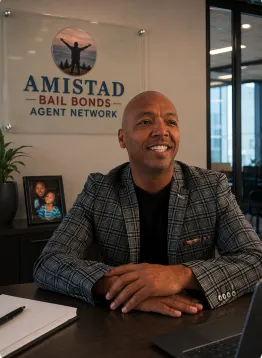
Paul Nello Romero
Founder & Licensed Bail Agent
This guide has been reviewed to ensure practical, accurate information reflecting current North Carolina bail bond procedures and state statutes.
A Final Word About Staying Out on Bond
Getting Released Is Just the First Step
Getting released is a big step. Staying released means showing up for court, following the conditions that apply to you, and dealing with problems before they grow. If someone in your family is back in custody in Raleigh and the court has set a new secured bond, our Raleigh bail bonds team can explain the bonding process and the responsibilities involved. For questions about a violation, a warrant, or changes to release conditions, speak with a criminal defense attorney. Raleigh bail bonds team